
Selling a house during divorce in the UK, your 2026 guide
If you are separating and considering selling your home, we can explain the sale process at your pace. We work with the owners and their solicitors, with the necessary agreement in place, and discuss a completion date that fits your circumstances.
Get a Free, Confidential Cash Offer Call us nowThe court's power comes from section 24A of the Matrimonial Causes Act 1973. If you lived together but never married, it comes from section 14 of the Trusts of Land and Appointment of Trustees Act 1996 instead. This guide covers the law in 2026, the routes open to you, and what each one costs and how long it takes in Sheffield, Doncaster, Rotherham and Barnsley.
Quick answer: You can sell the family home during a divorce once both owners agree, or where a court orders the sale. Most couples want a clean break. A cash sale completes in 7 to 28 days, so there are no months of viewings and no chain to collapse while you are untangling your finances.
Three steps, and the house is settled
No viewings, no agent, and one written offer put to both of you on the same terms.
Step 1
Tell us about the houseFill in the form at the bottom of this page. Say where the divorce has got to. It stays confidential.
Step 2
Get your offer the same dayIn writing, valid for 14 days. The same offer goes to both parties, through your own solicitors.
Step 3
You pick the completion dateMost sales complete in 7 to 28 days, or we time it to fit a hearing or a settlement date.
Written and reviewed by the South Yorkshire Property Buyers team.
Which situation are you in?
A. Amicable joint sale
Both of you want the house sold and the money split. The simplest case, and the most common one.
B. Contested sale
One of you wants to sell. The other won't engage or won't sign the TR1. That route runs through the family court.
C. Buy-out
One of you keeps the house and remortgages to pay the other their share. It turns on what a lender will accept.
D. After the final order
The final order is in place and a consent order requires a sale by a date or a trigger event.
E. Before the settlement
The divorce has started but the money isn't settled. You can still sell. The proceeds usually wait in the solicitor's account.
F. You weren't married
TOLATA 1996 applies rather than the Matrimonial Causes Act. There is no such thing as common-law marriage here.
Not sure where you stand?
Tell us about the property and we'll come back the same day with a written offer, valid for 14 days. No obligation, and no pressure either way.
Get my free cash offerThe legal framework in 2026, what has changed
Two laws matter here. The Matrimonial Causes Act 1973 still governs the money side of a marriage ending. Sections 23, 24, 24A and 25 give the court its powers: lump sums, transferring the house, forcing a sale, and deciding a fair split. The judge weighs up what each of you needs, what each of you put in, and above all the welfare of any child under 18. The Divorce, Dissolution and Separation Act 2020 changed the divorce process itself in April 2022 and brought in no-fault divorce. It set two waits you can't get round: 20 weeks from the application to the conditional order, then another 6 weeks to the final order.
The case to know is Standish v Standish [2025] UKSC 26. The Supreme Court used it to set out what counts as shared marital property, what stays with one person, and how each is split. Any advice that ignores it is out of date.
The latest ONS data on divorces in England and Wales show that most divorces now go through with no blame attached to either side. The whole thing usually takes well over a year. So most couples have to decide what to do about the house during the divorce, not after it.
The four practical routes to selling the family home
Sell on the open market
Usually the most money and the longest wait. About 5 to 6 months here, agent fees near 1.4% including VAT, and a chain that can still break.
Buy one another out
One of you keeps the house and remortgages for the other's share, with a TR1 to transfer the title. It fails when a lender won't lend on one income.
Ask the court to order a sale
Where one of you won't engage, the other can apply under section 24A MCA 1973, or section 14 TOLATA if you weren't married.
Sell to us
Less than the open market, in exchange for certainty. We price on the house itself, our written offer is valid for 14 days, and we complete in 7 to 28 days.
Want a real figure rather than an estimate?
Two minutes on the form is enough. We price on the property itself, not to a set percentage, and it's our best offer first time.
See what we'd payCan my ex stop the sale? Can the court force one?
If you own the house jointly, you both have to agree to sell. Without a court order, neither of you can make the other sign the TR1. If only your husband or wife is on the deeds, you still have home rights under Part IV of the Family Law Act 1996. Your solicitor registers a Class F land charge against the title, and that stops the house being sold over your head.
But the corollary is also true: the court can force the sale. Either spouse can apply under section 24A MCA 1973 as part of financial remedy proceedings. Cohabiting co-owners apply under section 14 TOLATA 1996. It isn't a quick fix. Most South Yorkshire money hearings are listed at Sheffield Combined Court Centre, and a fought case can take 12 to 18 months. But the route exists, and just knowing that is often enough to bring a reluctant ex back to the table.
Compare your selling options
Compare the routes using written terms for your own property. Ask each provider about fees, legal conditions, likely timing and what happens if the sale does not complete.
| Route | What to check | Costs to confirm |
|---|---|---|
| Estate agent | Marketing plan, viewings, buyer funding and any chain | Commission, conveyancing and bills while you wait |
| Auction | Reserve, auction terms, buyer commitments and completion deadline | Entry fee, legal pack, commission and any withdrawal charges |
| Direct purchase with us | Our written offer, proof of funds, legal checks and an agreed completion date | No estate agent commission. We can cover legal fees if you use our panel solicitor; you pay your own solicitor if you choose one independently. |
We assess the condition, location, tenure and details of each property before making an offer. Your solicitor can explain mortgage redemption, any charges and the final completion statement. Take time to consider your options before deciding.
Capital Gains Tax, the mortgage, and pensions
Three financial points trip up most divorcing couples on the property side.
Capital Gains Tax. You have three years to move the house between you without a tax bill. The clock starts at the end of the tax year you separated in, under rules that changed on 6 April 2023. There's no time limit at all where the transfer is made under a court order or a formal divorce agreement. Most sales of a main home are covered by Private Residence Relief anyway. Gov.uk has the official guidance. If you separated late in a tax year, or you're outside the three years, get tax advice on your own dates.
The mortgage. Whichever route you take, the mortgage is paid off in full on completion, and you are both released from it once that clears. Watch for an Early Repayment Charge if you are part-way through a fixed deal. It's usually 1% to 5% of what you still owe, so it can run to thousands. Your mortgage offer will say, or ring your lender and ask.
Pensions. Property and pensions are usually balanced against each other in the financial settlement. One party keeping more of the housing equity often means the other taking a larger share of the pension. Don't settle the house without looking at the pension. Getting that wrong is what divorced people most often regret, in the University of Bristol's Fair Shares research. It also found most couples never get a consent order at all, which leaves the money side open for years afterwards. Get one.
The realistic timeline
Working to a deadline?
Tell us the date. Most sales complete in 7 to 28 days, and if we can't work to your timescale we'll say so straight away.
Talk to us todayThe house can be sold at any point in that window. Couples normally do one of two things. Sell first, hold the money in the solicitor's account and agree the consent order later, which suits people who need the equity to buy somewhere else. Or agree the settlement first and sell at the end, which suits a Mesher order or a buy-out.
Selling a house during divorce in South Yorkshire, the local picture
If you're in Sheffield, Doncaster, Rotherham or Barnsley, three things matter: which court hears your case, what your house is worth, and which local solicitor to ring. Here they are.
The family courts
Sheffield Combined Court Centre houses the Designated Family Court for South Yorkshire: Law Courts, 50 West Bar, Sheffield S3 8PH (switchboard 0114 281 2400). It hears financial-remedy applications affecting Sheffield, Rotherham and, increasingly, Doncaster cases.
Doncaster Justice Centre North on College Road is permanently closed. Unsafe concrete (RAAC) was found in the building. Doncaster family hearings have moved to Doncaster Justice Centre South, Sheffield Magistrates' Court, Sheffield Combined Court Centre and Barnsley Law Court, or are held remotely on the Cloud Video Platform. Read your listing letter carefully. Your hearing may not be where you expect.
Barnsley Law Court takes overflow family work from Doncaster and Sheffield in addition to its own caseload.
What homes are worth locally (Land Registry)
The average home costs around £222,000 in Sheffield, £191,000 in Rotherham, £174,000 in Barnsley and £170,000 in Doncaster. Prices have edged up in all four over the past year. Where houses are cheaper, a buy-out is easier for one of you to fund, but there is less to split at the end. You can look up what houses on your own street actually sold for, free, on the Land Registry website.
Mediation and Resolution-accredited solicitors
Before you can go to court about money, you have to attend a MIAM (a Mandatory Information Assessment Meeting) with an accredited mediator. Ask about the Family Mediation Voucher Scheme when you book, which has given families up to £500 towards the cost. Mediators near Sheffield include MESH Mediation, Family Mediation Yorkshire (based in Barnsley, covering Sheffield and Rotherham) and Family Matters Mediation (Rotherham and Sheffield).
For legal advice, Resolution's Find a Member directory lists South Yorkshire family solicitors who have signed up to work constructively rather than pick fights. Sheffield family teams include Irwin Mitchell, Wake Smith, Switalskis, Keebles, Banner Jones and Howells; Sills & Betteridge cover Doncaster; Wilford Smith and Howells cover Rotherham; Howells covers Barnsley. Confirm individual accreditation via the Resolution postcode search before instructing.
If you both need a fast, confidential sale
We deal with both parties through their own solicitors. One written offer, valid for 14 days. Completion in as little as 7 days, or aligned to a financial-remedy date. No estate agents, no fees, no pressure.
Get Your Free Cash OfferCommon scams, and how to verify a legitimate cash buyer
Nobody regulates cash house buyers directly. The nearest thing is The Property Ombudsman's code for property buying companies, the National Association of Property Buyers, and ordinary consumer law. That leaves divorcing sellers exposed, because you are under time pressure, worn down, and often not being told everything. Run these six checks before you sign anything. Each takes minutes, and either of you can do them alone.
- Companies House. Search the buyer's legal company name and number on Companies House. Look for active status, filed accounts, a real registered office, and named directors.
- Proof of funds. Ask for a PDF bank statement (not a screenshot) on a named business account, dated within 14 days, showing cleared funds. Or a solicitor's letter on letterhead confirming cleared funds in client account.
- TPO and NAPB membership. Verify on the live TPO member directory. If a buyer claims membership but isn't listed, the claim is false.
- Reviews with detail. Look for reviews left steadily over the past year that describe a real sale. Read the one-star ones. What people complain about tells you more than the star average.
- Footer signals. The website should display company number, registered office, ICO registration, and complaints procedure link. Missing signals are signals.
- Your own solicitor. Each spouse instructs their own. A single solicitor can't act for both parties in a divorce sale, there is an inherent conflict of interest. Verify any solicitor's authorisation on the Law Society's Find a Solicitor register.
A legitimate buyer welcomes all six checks. A buyer who pushes back on any of them is telling you something useful.
How South Yorkshire Property Buyers handles a divorce sale
We are a small local team buying with our own money, and you deal with the same people from the first call to completion. Divorce sales get handled differently here. These rules don't bend.
- We deal with both parties through their own solicitors. One offer, identical to each side, on the same terms.
- Our written offer is valid for 14 days. No manufactured urgency around a hearing date.
- We can cover your legal fees when both sides use our panel solicitor, but you are always free to use your own. The right to your own solicitor is absolute.
- We complete to your timetable, not ours. Seven days, four weeks, or timed to fit an FDR or final-order date.
- We won't take sides. A cash buyer has no business pushing one of you towards the outcome the other wants.
If you want a confidential, no-obligation cash offer, you can request one here and we will put it in writing the same day.
Frequently asked questions
Not on your own, no. If you own it jointly, you both have to agree. If you can't agree, either of you can ask the court to order the sale under section 24A of the Matrimonial Causes Act 1973 if you are married or in a civil partnership, or section 14 of the Trusts of Land and Appointment of Trustees Act 1996 if you lived together but didn't marry. Courts don't order a sale lightly. The welfare of any child under 18 comes first.
A Mesher order puts the sale off until a set trigger: usually the youngest child turning 18, the parent living there remarrying or moving a partner in, or a fixed date. Courts use it when there isn't enough equity to house you both separately right now. The downside is real. The one who moves out has their money locked in the house for years.
A Martin order gives one spouse the right to occupy the home for life (or until they remarry or cohabit), at which point the property is sold and the proceeds split. It is rarer than a Mesher order and used where the asset pool is large enough to support indefinite occupation by one party.
Yes. A sale can legally complete at any point. In practice your solicitors will want the money held in a client account until the financial order is made, so neither of you can be accused of spending assets before the settlement is agreed.
You have three years to move the house between you without a Capital Gains Tax bill. The clock starts at the end of the tax year you separated in, under rules that changed on 6 April 2023. There is no time limit where the transfer is made under a court order or a formal divorce agreement. Most sales of a main home are covered by Private Residence Relief anyway. Check your own dates with a tax adviser.
The mortgage is paid off in full out of the sale money on the day you complete. You are both released from it once that payment clears. If you are part-way through a fixed deal there may be an Early Repayment Charge, usually 1% to 5% of what you still owe. Check your mortgage offer, or ring your lender and ask.
Not automatically 50/50. It depends on the financial settlement. The court weighs up the section 25 Matrimonial Causes Act 1973 factors: what each of you needs, sharing, compensation, the welfare of any child under 18, what each of you contributed, how long you were married, and what each of you can earn. Most couples agree it by consent order without ever going to a hearing.
A TR1 is the Land Registry form that transfers legal title at completion. Both registered owners must sign for a sale to complete. If your ex refuses, either party can apply to court under section 24A MCA 1973 or section 14 TOLATA 1996 for an order requiring sale. Family courts can also order that the recalcitrant party's signature be dispensed with where necessary.
Yes, either of you can apply, but the rules are different when you aren't married. There is no automatic right to a share of the other person's assets in England and Wales. Common-law marriage is a myth. A dispute over a jointly owned home is decided under the Trusts of Land and Appointment of Trustees Act 1996, by whose name is on the title at the Land Registry and any declaration of trust. Either co-owner can apply for a sale under section 14 TOLATA.
South Yorkshire Property Buyers can complete in as little as 7 days, with most divorce-related sales completing in 7 to 28 days once both parties' solicitors are instructed. An estate agent route typically takes 5-6 months from listing to completion.
We assess each property individually, using its condition, location, tenure and the information you give us. We explain our offer in writing so you can consider it without obligation. It may change if legal checks reveal a material issue or the property differs from its description.
Yes, always. You can instruct any SRA-regulated solicitor you like. In a divorce sale you each need your own family solicitor anyway, because one solicitor can't act for both of you. We can cover your legal fees if you use our panel solicitor, but you are free to use your own and pay for it yourself.
If you owe more than the house will sell for, that shortfall has to be dealt with before your lender will release its charge and let the sale go through. You can try to agree terms with the lender, split the shortfall between you as part of the settlement, or wait and hope prices recover. Get advice from your solicitor and from the free services at MoneyHelper or StepChange.
Run six checks. Look the company up on Companies House. Ask for a recent dated PDF proof of funds from a named business account. Check they are listed by The Property Ombudsman and the National Association of Property Buyers. Read the reviews, including the bad ones. Check the website footer shows a company number and registered office. And instruct your own solicitor, not theirs.
- Selling your house after divorce or separation
- Sell house fast Sheffield
- Sell house fast Doncaster
- Sell house fast Rotherham
- Sell house fast Barnsley
- Sell house fast Wakefield
- How the SYPB process works
- All your options for selling quickly compared
This page is a general guide and not legal, tax or financial advice. Every divorce is different. Before making decisions about the matrimonial home, take advice from a Resolution-accredited family-law solicitor, an FMC-accredited mediator, or the free services at Citizens Advice and MoneyHelper.
No. Being married gives you the right to stay in the family home, even if the deeds are only in your husband's or wife's name. Neither of you can force the other out without a court order. If you feel unsafe, speak to a family solicitor about an occupation order straight away, or ring the police if you are in danger. Moving out for some peace doesn't mean you give up your share of the money.
Not easily, if you protect your position now. Because you are married you have what the law calls home rights, and your solicitor can register a notice against the property at the Land Registry. That notice shows up on any sale or remortgage, so a buyer or lender sees it and the sale stalls. Do this as early as you can. If you aren't married, the rules are different, so get advice quickly.
You are still on the hook. If the mortgage is in both names you are each responsible for all of it, not half each, and missed payments hit both credit files. The lender can chase either of you for the full amount. Tell them you have separated, because many will agree a short-term arrangement, and pay what you can. If the mortgage is in your ex's sole name only they are liable, but the arrears still come out of what you both walk away with.
No, selling isn't the only option. One of you may be able to buy the other out by taking the mortgage on alone, if a lender will accept you on your income by yourself. Where there are children, a court can put the sale off until they are older. Selling is often the cleanest way to free up the money and untangle your finances. A family solicitor can tell you which options your actual figures will support.
Get more than one opinion in writing. Three local estate agent valuations are the usual starting point, and if you still can't agree you can jointly pay for a RICS surveyor to value it properly, which a court will take seriously. Sold prices for homes near you are free to look up on the Land Registry website. If you ask us for an offer, you get it in writing the same day, and both of you get the same figure on the same terms.
We can keep it quiet, but we can't promise total secrecy. Selling to us means no For Sale board, no online listing and no stream of strangers walking round your home. We usually only need one visit, and we don't discuss your situation with anyone outside the sale. What we can't control is the public record, because once the sale completes the price is registered with the Land Registry and turns up on property websites later.
The right route depends on the property, the written terms and your priorities. Compare fees, ongoing bills, buyer funding and the proposed completion date. We assess each property individually and explain our offer without an obligation to accept.
You pay no estate agent fees and nothing to us, and we can cover your legal fees on the sale if you use our panel solicitor. You will each still need your own solicitor for the divorce itself, and that bill is separate. Sale costs normally come out of the completion money rather than your pocket today. Ask for every figure in writing before you agree to anything, from us or from anybody else.
Usually yes, but we do need to see inside at some point. We normally only need one short visit, and we can arrange it for a time when just one of you is home if that is easier. If your ex refuses access completely, your solicitors will need to deal with it, because we can't buy a house we have never been inside. Tell us early and we will work around it as best we can.
No. Our offer is free and comes with no obligation, so you aren't tied in and there is no penalty for pulling out, right up until contracts are exchanged. Our written offer stays open for 14 days, so you both have time to take it to your own solicitors. Divorce sales do fall through when people change their minds, and we would far rather you were sure. If things change later, tell us and we can pick it up again when you are ready.
In almost all cases, no. We buy whole houses rather than one person's share, because a half share is very hard to sell on and the mortgage stays in both names anyway. What we can do is give you both the same written offer for the whole property, so each of you can take identical figures to your own solicitor. If you want out and your ex wants to stay, a buy-out is normally the route.
Guides that might help right now
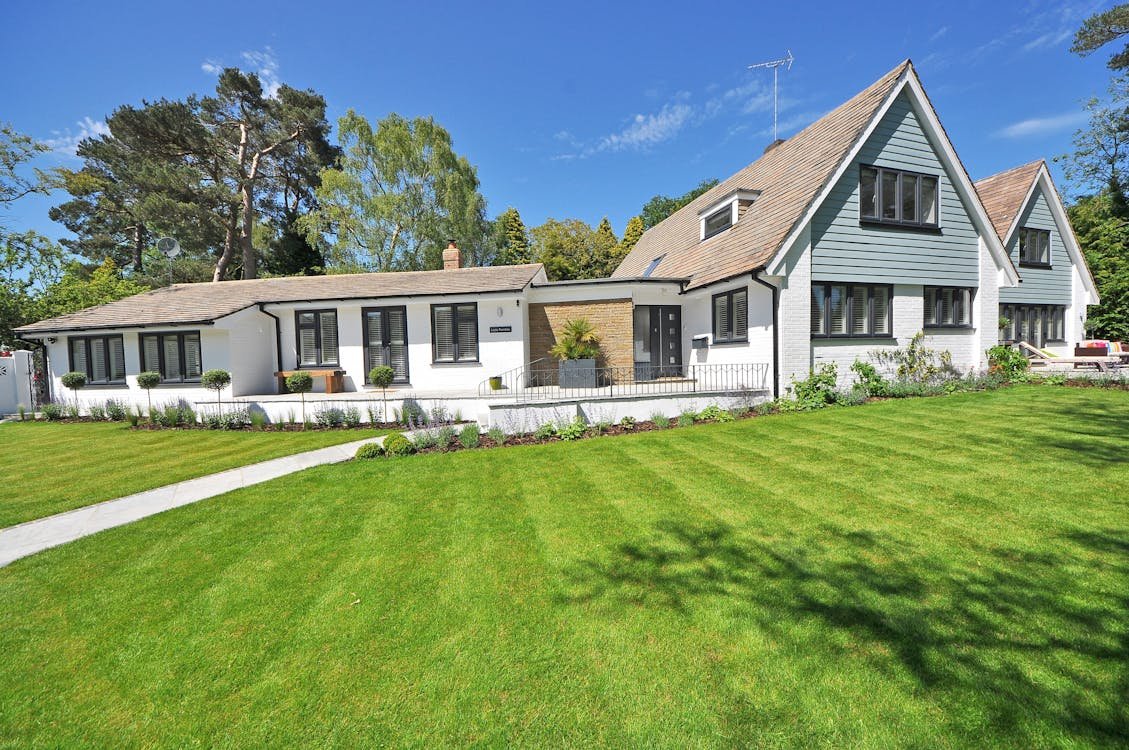
Do You Have to Sell the House in a Divorce?
When a sale is required, when it isn't, and what a court can order if one of you won't agree to it.
Read guide →
What Happens to Your Mortgage When You Sell?
How the joint mortgage is repaid on completion, when both of you are released, and where early repayment charges bite.
Read guide →
How Long Does It Take to Sell a House?
Every stage of a UK sale with realistic timings, and the points where sales most often stall or collapse.
Read guide →A confidential sale, on terms you both see
Tell us about the house and where things have got to. One written offer, valid for 14 days, put to both parties through your own solicitors.
Our promise to you: We will never pressure you into a sale. Your enquiry is completely confidential. If we make you an offer and it isn't right for you, there is absolutely no obligation to proceed.
Start with your postcode. We will call to talk through the property, your timing and any questions. No obligation to proceed.