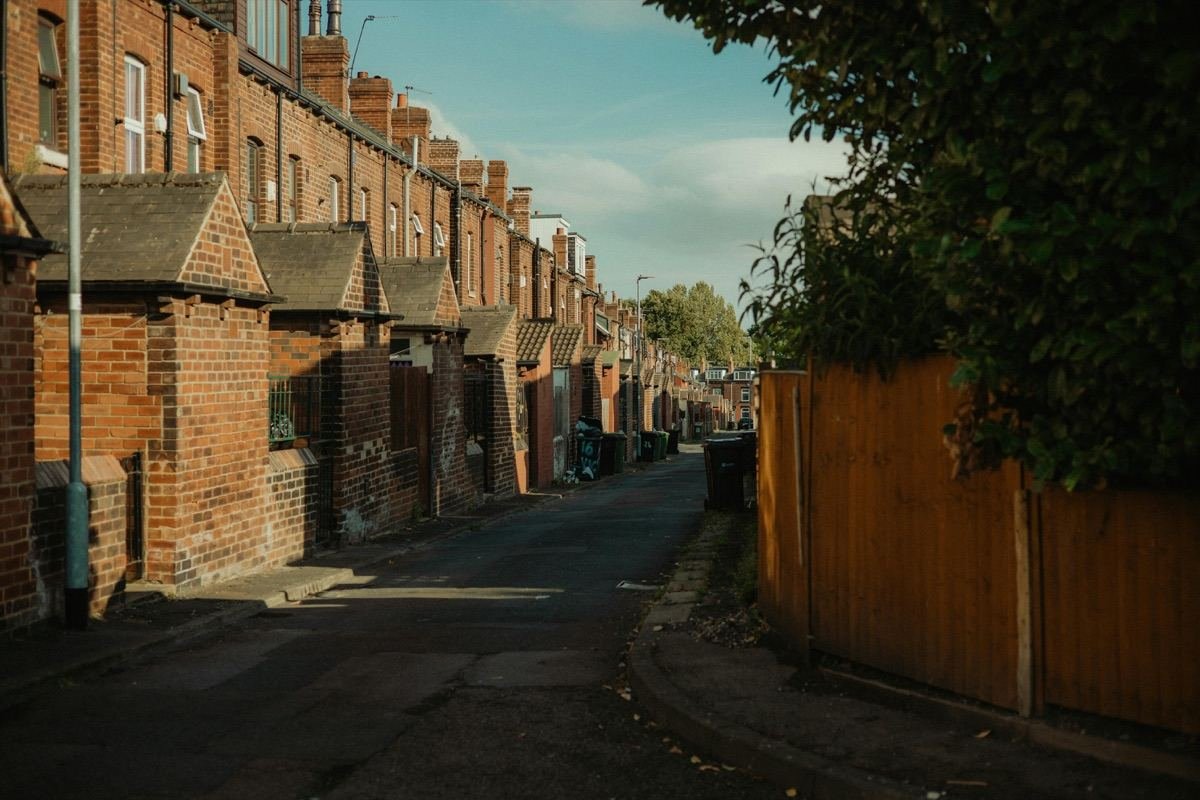
Sell your house fast in Wakefield
Need to sell a house in Wakefield? Our local team considers inherited, tenanted, empty and repair-needing properties. Tell us about the house and your timing. We will explain the process and assess the property individually, with no obligation to proceed.
Quick answer: We buy houses for cash right across the Wakefield district, WF1 to WF11, with our own funds. Every property is priced individually on what it is and on what you tell us. We never work off a percentage of market value. The figure we quote is our best offer at that point, on the information given. You are trading some price for speed, certainty and no fees. Written offer the same day. Completion in 7 to 28 days. The offer stays valid for 14 days. We handle probate and inherited houses, divorce sales, mortgage arrears, empty properties running up the council tax premium, tenanted properties, flood-affected homes, non-standard construction and leasehold flats lenders won't touch. Wakefield is in West Yorkshire and we have no office there. We are a South Yorkshire team about 25 miles down the M1, and we say so plainly.
Three steps to a cash sale in Wakefield
No listing, no viewings, and no waiting to find out whether a buyer in Wakefield holds together.
Step 1
Tell us about the propertyFill in the form at the bottom of this page. Street, condition, and the timescale you're working to.
Step 2
Get your offer the same dayIn writing, valid for 14 days. Our best offer on what you've told us, not a number we work up from.
Step 3
You pick the completion dateWe handle the paperwork with your solicitor. Most sales complete in 7 to 28 days, or later if you need longer.
Wakefield is in West Yorkshire, and we aren't pretending otherwise
The City of Wakefield sits inside the Metropolitan Borough of Wakefield. That is one of the five metropolitan boroughs of West Yorkshire, alongside Leeds, Bradford, Kirklees and Calderdale. It comes under the West Yorkshire Combined Authority and the Mayor of West Yorkshire. That is a different body from the South Yorkshire Mayoral Combined Authority, which covers Sheffield, Barnsley, Rotherham and Doncaster. Any cash buyer page that quietly implies Wakefield is South Yorkshire is either careless or hoping you won't notice.
We are called South Yorkshire Property Buyers because that is where most of our buying happens. Wakefield is next door, not in the middle of our patch. It is about 25 miles from Sheffield by road, roughly half an hour's drive. Barnsley is a little over ten miles away. We have no Wakefield office and we won't invent one. What we do have is funds of our own and a team that can get to a house in Castleford or Hemsworth as easily as one in Mexborough. The district is also far bigger than the city itself. So if you are in Castleford, Pontefract, Normanton, Knottingley, Featherstone, Hemsworth, Ossett or Horbury, this page is about you.
How is the Wakefield property market right now?
Wakefield house prices are still rising, but slowly, and they sit well below the national average. The HM Land Registry UK House Price Index put the district average at £197,140 in May 2026. That is what houses actually sold for, not what they were advertised at. The rest of Yorkshire is dearer, and the UK as a whole is dearer again.
Houses of every type are worth a little more than a year ago. Flats are the exception. The average Wakefield flat is worth less than it was, at around £99,000. Flats are the only part of the Wakefield market still falling.
Fewer houses are selling than a year ago. Part of that is the stamp duty threshold change on 1 April 2025, which pulled sales forward into March. Ignore anyone quoting the very latest monthly figures as a crash. The Land Registry only registers a sale weeks or months after it completes, so recent months always look empty.
There are more homes for sale than there are buyers, so buyers can afford to pick and choose. Rightmove reported in June 2026 that over a third of new listings never go on to sell. Listing isn't selling. Across Yorkshire and The Humber it takes about two months just to agree a sale, before any legal work starts. Sales agreed and buyer demand are both down on last year. Mortgage rates are easing gently rather than collapsing.
Why Rightmove and the Land Registry give different Wakefield averages
This catches out almost every Wakefield seller. Rightmove's Wakefield sold prices page shows an average of about £241,000. The Land Registry says £197,140. That is a gap of over £40,000 for what looks like the same town.
Neither is lying. Rightmove's sold price search covers a wide radius around a place name, so it sweeps in Leeds suburbs and North Yorkshire villages. The Land Registry figure stops at the council boundary. Take the Rightmove number into a valuation conversation and you'll think you are being lowballed, when really you are comparing two different areas. Other websites gave us four more different Wakefield "averages" while we researched this page. We use the official figure and name the month it belongs to.
Compare written offers and their conditions alongside the fees, ongoing bills and completion arrangements for each route. Ask your solicitor to explain what would be deducted from the proceeds. The right choice depends on your property and your circumstances.
How we price a Wakefield house
A terrace in Hemsworth and a detached house in Crigglestone aren't the same market, and the district average describes neither. That is why we don't work to a set percentage of market value. Every property is priced on what it actually is and on what you tell us about the sale. Give us those details and you get a written offer the same day, valid for 14 days.
Selling in Wakefield by postcode
Only WF1 to WF11 sit substantially inside the district, and even those vary enormously. The averages below come from Zoopla sold prices for the last 12 months. The medians are our own working from the 2025 Land Registry Price Paid file.
WF1. Wakefield city, Agbrigg, Belle Vue, Eastmoor, Outwood
Average £211,974. More homes here sell for under £100,000 than anywhere else in the district, and that is the level where lenders start refusing to lend, so buyers thin out. Plenty of purpose-built flats around Wakefield East. Agbrigg, College Grove, Lincoln Street and Peterson Road are four of the six Article 4 HMO areas. Outside the coal mining high risk area.
WF2. Wakefield west, Lupset, Sandal, Walton, Newmillerdam
Average £252,402. Wakefield West has a lot of ex-council houses now in private hands. Lupset and Newmillerdam fall inside the mining high risk area. The council names Walton (Drain Beck) and Newmillerdam (Owler Beck) as at risk of flooding from ordinary watercourses.
WF3. Stanley, Lofthouse, East Ardsley, Tingley
Average £251,057, the strongest part of the district. WF3 straddles the Leeds boundary, so part of it is billed by Leeds rather than Wakefield. That changes which council's rules apply to you, not just your address.
WF4. Horbury, Crigglestone, Crofton, Netherton, Middlestown, Flockton
Average £257,111, the dearest part of the district. The heart of the mining high risk area: Crofton, Sharlston, Netherton, Middlestown, Horbury and Durkar all sit inside it, because the coal here was worked close to the surface. Parts of WF4 fall in Kirklees.
WF5. Ossett, Gawthorpe
Average £226,537. Terraces here hold their value better than anywhere else in WF. Outside the mining high risk area. Parts of WF5 fall in Kirklees, and Healey Ossett and Ossett Spa each have a council flood risk map.
WF6. Normanton, Altofts
Average £221,148, with Normanton terraces nearer £158,000. Altofts sits inside the mining high risk area, and Patients Lane there is a named flooding hotspot.
WF7. Featherstone, Purston Jaglin, Streethouse, Ackworth
Average £217,129, but the spread is wide: Featherstone terraces around £132,000, Ackworth terraces closer to £187,500. Ackton Hall colliery closed in 1985. Featherstone is outside the mining high risk area, Streethouse is inside it.
WF8. Pontefract, Darrington, East Hardwick, Carleton
Average £229,866, with Pontefract terraces nearer £151,000. Prince of Wales colliery closed in 2002. Outside the mining high risk area. Lady Balk and Eastbourne are named by the council as surface water flood spots.
WF9. Hemsworth, South Elmsall, South Kirkby, Fitzwilliam, Kinsley, Upton, Badsworth
The cheapest WF district by some distance: average £175,662, with terraces around £130,000 and Hemsworth terraces nearer £122,000. Collieries closed here at Ferrymoor/Riddings, Kinsley, South Kirkby and Frickley, yet these settlements fall outside the mining high risk area. The council names South Elmsall town centre, Minsthorpe, Moorthorpe and Carr Lane in South Kirkby, Milton Drive in Kinsley and parts of Upton as surface water flood spots.
WF10. Castleford, Glasshoughton, Airedale, Cutsyke, Whitwood, Ferry Fryston
Average £192,137, with Castleford terraces around £143,000. Castleford Central and Glasshoughton is the most terraced ward in the district. Castleford Centre North and Smawthorne are two of the six Article 4 HMO areas. Cutsyke on Carr Beck is the district's largest named flood cluster.
WF11. Knottingley, Ferrybridge
Average £201,814, with Knottingley terraces around £152,500. No mining high risk area within about a kilometre of the settlement centres, despite Kellingley, the last deep mine in Britain, closing in December 2015 just over the boundary at Beal in North Yorkshire.
If your postcode is WF12 to WF17, you aren't in Wakefield district. WF12 and WF13 (Dewsbury), WF14 (Mirfield), WF15 (Liversedge), WF16 (Heckmondwike) and WF17 (Batley) are in Kirklees, so Wakefield prices, council rules and search authority don't describe you. Your benchmark is Kirklees, where the average house price was £206,000 in May 2026. That is worth more than Wakefield district, and growing faster. We buy there too, so ring us either way.
What makes a Wakefield house hard to sell
Most of what we buy here isn't distressed. It is ordinary stock that lenders and cautious buyers make difficult. These are the local reasons why.
A district of semis, not pit terraces
Wakefield isn't rows of colliery terraces. It's semis, far more than average, with nearly a fifth of the housing built between 1945 and 1964.
Flats are going backwards
Flats sell at about half the rate you'd expect, and they're the only homes in the district still worth less than three years ago. Waiting has cost owners money.
Nearly half the district is Band A
Nearly half of Wakefield's homes are council tax Band A, against about a quarter across England. Below roughly £100,000 many lenders won't lend at all.
Coal mining searches
Every Wakefield settlement sits inside the coal mining reporting area, so a search is routine and rarely sinks a sale on its own. What matters is the risk area.
Flooding
Thousands of homes are at some flood risk, from rivers and surface water, and the council names the specific streets in its own flood risk strategy.
Non-standard and PRC construction
Types like Airey, Unity, Cornish and Reema were designated defective under the Housing Defects Act 1984. Lenders generally decline a designated type without a repair certificate.
HMO Article 4
In six named parts of the district an investor needs full planning permission to create a small shared house. That thins the buyer pool and can soften the price.
Not sure where you stand?
Tell us about the property and we'll come back the same day with a written offer, valid for 14 days. No obligation, and no pressure either way.
Get my free cash offerArticle 4 covers Castleford Centre North, Castleford Smawthorne, Wakefield Agbrigg, Wakefield College Grove, Wakefield Lincoln Street and Wakefield Peterson Road. Named surface water spots include South Elmsall, Ackton Bridge, Beech Grove, Fairway, Glass Houghton, Hightown, Kirkgate, Little Hemsworth, Lofthouse Gate, Pontefract Road, Priory Road, Snow Hill, Thornes, Thorpe Audlin, Westgate and Wrenthorpe, from the council's Local Flood Risk Management Strategy after Storms Desmond and Eva. PRC and non-standard types here include Airey, Unity, Cornish, Reema and Wimpey No-Fines, designated under the Housing Defects Act 1984 and Part XVI of the Housing Act 1985, section 528. Vico Homes holds much of the former council stock, and the district drains into the Aire and Calder. Mining subsidence sits under the Coal Mining Subsidence Act 1991, and the A61 corridor runs through the district.
Want a real figure rather than an estimate?
Two minutes on the form is enough. We price on the property itself, not to a set percentage, and it's our best offer first time.
See what we'd payThe empty property clock in Wakefield
If you have inherited a house or moved out of one, this is the section that costs money. Wakefield gives a 100% council tax discount for one month from the date a property becomes unoccupied and unfurnished. After that month, full council tax is payable.
From 1 April 2025 the Empty Property Premium bites after one year empty and unfurnished, halved from the previous two-year threshold. It then escalates with the length of the vacancy, reaching a 200% premium at five to ten years and 300% at ten years or more. A 300% premium means four times the normal bill. The counterintuitive one: from 1 April 2025 an unoccupied but furnished property attracts an additional 100% premium immediately, from the date it becomes empty, with no grace period at all. Leaving the furniture in makes the bill worse straight away. Wakefield also gives no discount for second homes.
There are exceptions, and we would rather you knew about them than felt rushed. Wakefield allows up to 12 months while a property is actively on the market for sale or let. It allows up to 12 months for probate, counting from the date probate or letters of administration are granted. It allows up to 12 months for major repairs. So if your house went on the market three months ago, you are protected. Nobody should be telling you the clock is already running. Two groups do need to watch it: anyone who has been on the market over a year, and anyone who takes their listing down, because the exception ends the moment the property comes off the market. For an executor, twelve months from the grant is a real deadline, not a sales tactic.
Compare your selling options
Compare the routes using written terms for your own property. Ask each provider about fees, legal conditions, likely timing and what happens if the sale does not complete.
| Route | What to check | Costs to confirm |
|---|---|---|
| Estate agent | Marketing plan, viewings, buyer funding and any chain | Commission, conveyancing and bills while you wait |
| Auction | Reserve, auction terms, buyer commitments and completion deadline | Entry fee, legal pack, commission and any withdrawal charges |
| Direct purchase with us | Our written offer, proof of funds, legal checks and an agreed completion date | No estate agent commission. We can cover legal fees if you use our panel solicitor; you pay your own solicitor if you choose one independently. |
We assess the condition, location, tenure and details of each property before making an offer. Your solicitor can explain mortgage redemption, any charges and the final completion statement. Take time to consider your options before deciding.
Make a comparison using your own property details
A useful comparison starts with the details of your own property and your priorities. Gather the following before deciding:
- A written offer and the conditions attached to it.
- Confirmation of the buyer's funds and whether a mortgage or chain is involved.
- Written fees from your agent, auctioneer or solicitor, including any charges if the sale falls through.
- Your mortgage redemption statement, ongoing bills and any other secured borrowing.
- A realistic completion date, confirmed with your solicitor.
We explain our offer in writing, with no obligation to accept. Legal checks can reveal issues that affect the terms, so ask your solicitor to review the details before you commit.
How a Wakefield cash sale actually works
Step 1. You tell us about the property using the form. Two minutes. Address, type, postcode and a short note on your situation.
Step 2. We ring you back as fast as we can and ask what matters here: any tenant, any flood history, any mining or subsidence history, structural or damp work, freehold or leasehold, how long it has been empty, and any probate, divorce or arrears context. We give you a written cash offer the same day we have seen the property.
Step 3. If you accept, solicitors are instructed. We can cover your legal fees if you use our panel solicitor. You can use your own instead, which is always your right, and we won't press you either way. Check any firm at solicitors.lawsociety.org.uk.
Step 4. Conveyancing is the longest stage and it sets your completion date. The friction points here are usually the CON29M coal mining search, local authority searches from Wakefield Council, missing deeds on older terraces (indemnity insurance normally clears that in days), leasehold management packs, and redemption statements from smaller lenders.
Step 5. Completion in 7 to 28 days, or a date that suits you: a grant of probate, a divorce settlement, a possession hearing, or a purchase at the other end you can't risk slipping.
Wakefield details worth having to hand
- Possession and repossession claims for Wakefield are heard at Wakefield Civil and Family Justice Centre, 1 Mulberry Way, WF1 2QN, which also handles money claims, bankruptcy and divorce hearings. Contact goes through the national Civil and Family Court centre on 0300 123 5577, and the counter is by appointment only, 10am to 2pm.
- Probate. HMCTS lists the Leeds District Probate Registry at York House, 31 York Place, Leeds LS1 2ED, on 0300 303 0648. Applications are now made centrally rather than to a local registry, so check the current postal address on GOV.UK before sending anything. There hasn't been a Wakefield probate registry for years.
- New build competition. New builds in Wakefield sell for far more than existing homes, roughly half as much again. If you bought a new build here a few years ago, you are now competing with the second-hand market, not the developer's price list. That is a common reason a resale stalls.
- Disclosure rules changed. You still have to tell buyers about flood risk, mining areas and construction type. The rule just moved. The National Trading Standards guidance known as Parts A, B and C was withdrawn in May 2025, and the Digital Markets, Competition and Consumers Act 2024 took over from 6 April 2025. So any page still citing "NTS Parts A, B and C" as current is out of date.
- Landlords. The Renters' Rights Act 2025 received Royal Assent on 27 October 2025 and Section 21 no-fault evictions in England have been abolished, with commencement reported as 1 May 2026. Regaining vacant possession to sell now means a possession ground with a notice period and a re-let restriction. Selling with the tenant in situ avoids that, because the new owner takes the tenancy across. See our tenanted property guide.
How to check any Wakefield cash buyer, including us
Five minutes of checks filters out the operators who chip the price after the survey, or drop it on completion day. Search the company at Companies House. Our company and purchasing details are on our About page for you to verify. Ask for proof of funds as a solicitor's letter dated within the last 14 days, not a screenshot. Check the company's ICO registration. And check the FCA register if anyone offers to buy your home and let you stay on as a tenant, which we don't do. Using your own solicitor is always your right and no legitimate buyer makes theirs a condition of the sale. A legitimate buyer never asks for an upfront fee or a deposit. They never want a binding signature before you have a written offer. And they never drop the price on completion day without a real, evidenced reason backed by a written survey. Honest note on us: our public review count is still building, so those checks matter more than a star rating anyone can buy. Our guide to how house buying companies work goes further.
Frequently asked questions: Wakefield
Yes, and you are right about the county. Wakefield is one of the five metropolitan boroughs of West Yorkshire, under the West Yorkshire Combined Authority, which is a different body from the South Yorkshire one. We are a South Yorkshire team and we have no Wakefield office. Wakefield is about 25 miles from Sheffield up the M1 and a little over ten miles from Barnsley, so it is next door rather than far away. We buy with our own funds and we come and look at the house ourselves.
Completion runs 7 to 28 days from offer acceptance, and 7 days is the fastest we have done, on unencumbered freehold property. We are the buyer, so there is no chain, no mortgage application and no broker. Leasehold flats usually take longer, because the management pack has to come back from the managing agent and that is outside anyone's control.
We don't work to a percentage. Every Wakefield property is priced on what it actually is: condition, tenure, postcode, any flood or mining history, and whatever you tell us about the sale. The figure we give you is our best offer at that point, based on the information provided. We don't start low and creep up to get a deal over the line. The offer can change only if conveyancing turns up something material, such as a title defect or a structural problem, or if the property turns out to be different from how it was described.
No. WF12 and WF13 are Dewsbury, WF14 is Mirfield, WF15 is Liversedge, WF16 is Heckmondwike and WF17 is Batley. All of them are in Kirklees, not Wakefield. So Wakefield house prices and Wakefield council rules don't describe your situation. Your benchmark is Kirklees, where the average house price was £206,000 in May 2026. That is higher than Wakefield district and growing faster. We buy there as well.
Mostly the market. Flats sell at about half the rate you would expect from how many of them there are in Wakefield. They are also the only type of home in the district still worth less than it was three years ago, while every house type has risen. Nearly every flat sale here is leasehold, which makes lenders cautious and slows everything down. Waiting for a recovery hasn't worked for three years.
The search itself, no. Every Wakefield settlement is in the coal mining reporting area, so a CON29M report is routine. It costs from £27 plus VAT and normally comes back in 24 to 48 hours. The first postcode check on the Mining Remediation Authority website is free. What can hold things up is an adverse finding. On our reading of the Authority's maps, about a quarter of the district sits inside the Development High Risk Area. It is concentrated in the west, around Crofton, Sharlston, Netherton, Middlestown, Horbury, Durkar, Newmillerdam, Lupset, Altofts and Streethouse, rather than in the eastern pit villages. We don't need a mortgage, so a mining flag doesn't stop us buying.
Wakefield gives a 100% discount for one month from the date a property becomes unoccupied and unfurnished. After that, full council tax. From 1 April 2025 the Empty Property Premium starts after one year, halved from the old two-year threshold. It rises to 200% at five to ten years, and 300% at ten years or more. If the property is empty but still furnished, an extra 100% premium applies straight away, with no grace period. There are 12-month exceptions: for a property actively marketed for sale or let, for probate running from the grant, and for major repairs. If you are already on the market you are probably protected, so check your bill before anyone tells you the clock is running.
No. We buy with the tenant in situ, so the tenancy transfers to us as part of the purchase and you avoid the possession process entirely. That matters more since the Renters' Rights Act 2025, which received Royal Assent on 27 October 2025 and abolished Section 21 no-fault evictions in England. Worth knowing too: Wakefield Council doesn't run a selective licensing scheme, only mandatory HMO licensing, so a straightforward let here carries less regulatory baggage than in some neighbouring districts.
You pay us nothing and there is no agent commission. We can cover your legal fees if you use our panel solicitor. You can always use your own solicitor instead, which is your right and we won't discourage it, and we contribute towards those costs. Verify any firm on the Law Society register before instructing them.
Ready when you are
Written cash offer the same day, valid for 14 days. No obligation, no pressure, no fees. If a cash route isn't right for your Wakefield property we will say so.
Guides that might help

What to Do When Your House Sale Falls Through
Roughly one in four agreed sales collapses before exchange. What it costs and how to move on quickly.
Read guide →
How cash offers are assessed
How we assess your property and what to check in a written offer before deciding.
Read guide →
The Empty Homes Council Tax Premium
Every South Yorkshire borough now doubles the bill at twelve months empty. What a slow sale quietly costs.
Read guide →Selling a house in Wakefield?
We buy directly across Wakefield and the rest of West Yorkshire with our own funds. No lender, no survey, no chain, and no estate agent fees.
Our promise to you: We will never pressure you into a sale. Your enquiry is completely confidential. If we make you an offer and it isn't right for you, there is absolutely no obligation to proceed.
Start with your postcode. We will call to talk through the property, your timing and any questions. No obligation to proceed.