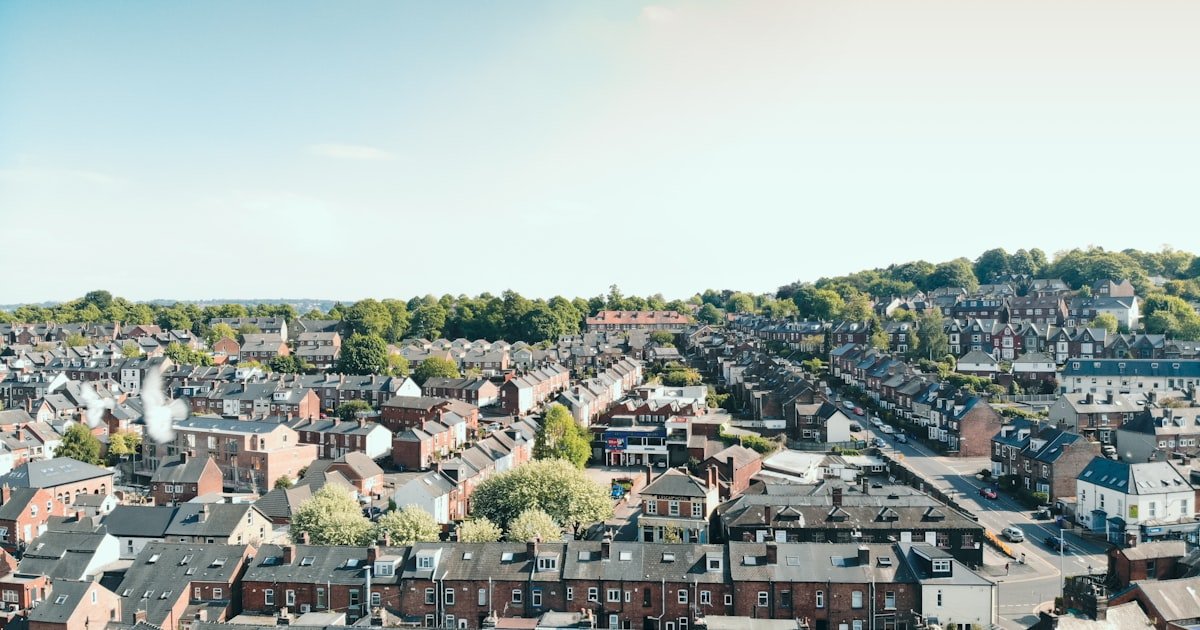
PRC defective housing in Sheffield S5/S35: the Airey, Cornish, Boot story
Across Sheffield, 238 houses and 131 flats are officially designated "Defective" under Part XVI of the Housing Act 1985: most of them Airey, Cornish Unit, Boot, Unity, Wates and Tarran types thrown up in the late 1940s to plug the post-war housing gap. If you own one in S5 Firth Park or S35 Chapeltown and have just discovered the mortgage lender refuses to touch it, this guide explains why, what a Halifax-approved repair really costs in 2026, and what your realistic sale options look like.
Quick answer: Sheffield has 238 houses and 131 flats officially designated Defective under Part XVI of the Housing Act 1985, the legislative successor to the Housing Defects Act 1984. The nine PRC types named in the schedule (Airey, Cornish Unit, Boot, Unity, Wates, Tarran, Orlit, Reema and Parkinson Framed) cluster heavily in S5 (Firth Park, Shiregreen) and S35 (Chapeltown, Grenoside). High street lenders almost always refuse a mortgage unless the property has been fully repaired under a Halifax-approved scheme and a PRC Homes Ltd Code 6 certificate has been issued. Repair cost in 2026 is typically £45,000 to £100,000+. If repair isn't viable, owners realistically choose between a chain-free cash sale for a house that needs repairs or auction. For the full deep guide, see selling a house that needs repairs in South Yorkshire.
What "PRC" and "Defective" actually mean
PRC stands for Pre-cast Reinforced Concrete. Between roughly 1945 and 1965, the UK government commissioned tens of thousands of system-built houses using factory-cast concrete panels, slabs and columns instead of traditional brick and block. The aim was speed, most could be erected in days, and the post-war labour shortage made traditional construction expensive.
The problem only emerged decades later. The steel reinforcement bars inside the concrete panels began to corrode: thin concrete cover, carbonation, and rainwater penetrating panel joints. As steel corrodes it expands, cracking and spalling the surrounding concrete. By the early 1980s the Building Research Establishment had identified the problem as widespread and structurally serious.
The legislative response was the Housing Defects Act 1984, which named specific PRC house types as "Defective" and created a scheme of grants and assistance. The 1984 Act was later consolidated into Part XVI of the Housing Act 1985, which remains the operative legislation today. The list of designated types was set out in Schedule 20 and subsequent statutory designations.
The nine designated PRC types
Nine system-built house types are formally designated Defective under Part XVI:
| Type | Construction | Typical era |
|---|---|---|
| Airey | PRC columns with concrete plank cladding | 1945-55 |
| Cornish Unit (Mk I and Mk II) | PRC panels with mansard upper storey | 1945-55 |
| Boot (Pier and Panel) | PRC piers with infill panels | 1920s-50s |
| Unity (Mk I, Mk II, Butterley) | PRC frame with concrete panel infill | 1945-55 |
| Wates | PRC frame with concrete panel cladding | 1945-55 |
| Tarran | PRC panel construction, often bungalow | 1945-55 |
| Orlit | PRC frame with hollow concrete panels | 1945-55 |
| Reema (Hollow Panel) | Large PRC hollow panels | 1945-60 |
| Parkinson Framed | PRC frame with cladding | 1945-55 |
Other Defective designations: Smith, Stent, Stonecrete, Woolaway and Dorran, were added by separate statutory instruments. Sheffield's stock is overwhelmingly Airey, Cornish, Boot, Unity, Wates and Tarran.
Sheffield's PRC stock: 238 houses + 131 flats
Sheffield City Council records show 238 PRC houses and 131 PRC flats still designated under Part XVI in the city. The vast majority were built as council housing in the late 1940s to early 1950s, then sold off under Right to Buy from 1980 onwards. Today many are owner-occupied, meaning the structural problem and repair cost sit with the homeowner, not the local authority.
The two clearest concentrations:
- S5: Firth Park, Shiregreen, Longley. Cornish Unit and Airey types dominate. Streets around Sicey Avenue, Bellhouse Road and Concord Park show visible PRC clusters.
- S35: Chapeltown, Grenoside, High Green. A mix of Airey, Cornish and Wates types, originally built to house steelworkers at the now-closed Stocksbridge steelworks.
Smaller clusters exist in S6 Hillsborough, S12 Hackenthorpe and S14 Gleadless. Similar Defective stock sits across Rotherham, Doncaster and Barnsley.
If you can see vertical concrete columns or panel joins from the front garden, and the house dates from 1945-55, it is almost certainly PRC. The next call should be to the conveyancing solicitor, not the estate agent.
Why mortgage lenders refuse unrepaired PRC houses
Almost every high street lender: Halifax, Nationwide, Santander, Barclays, NatWest, HSBC, will decline a mortgage on a designated Defective PRC house unless it has been fully repaired. The reasoning:
- Structural risk. Corroding steel reinforcement is a known failure mode that surveyors can't easily verify from outside the panels.
- Valuation difficulty. Thin comparable evidence, a restricted buyer pool, and open-ended remediation costs make a defensible market value hard to produce.
- Re-sale risk. If the lender has to repossess, the same restricted buyer pool makes recovery slow and uncertain.
- Insurance friction. Building insurance for unrepaired PRC stock is harder to source, and some insurers require structural survey evidence before quoting.
The practical effect: most buyers of an unrepaired Airey or Cornish house in Sheffield must pay cash. The buyer pool collapses to cash buyers, developers and specialist landlords willing to fund repair themselves, and prices fall to roughly 50-65% of post-repair market value.
The PRC Homes Ltd Code 6 certificate
In the late 1980s, the NHBC and the construction industry set up PRC Homes Ltd to license approved repair schemes for designated Defective house types. A licensed scheme provides a structural specification (typically removing concrete panels, installing a new brick-and-block envelope, and reinstating finishes) plus a warranty.
On completion, the licensee issues a PRC Certificate, commonly called a Code 6, confirming the work meets the approved scheme and a 60-year design life. This is the document mortgage lenders rely on:
- Before Code 6: cash buyers only, restricted insurance, 50-65% of post-repair market value.
- After a recognised repair: ask your surveyor and lender what the certification means for mortgage eligibility and insurance.
If you are buying or selling, the Code 6 certificate should sit with the deeds. If missing, the conveyancing solicitor will ask the repair contractor or PRC Homes Ltd licensee to reissue. No certificate, no mainstream mortgage.
What a full Halifax-approved repair costs in 2026
A full structural repair under a Halifax-approved (or equivalent lender-approved) scheme typically costs £45,000 to £100,000+ in 2026, depending on:
- House type. Cornish Units cost more than single-storey Tarran bungalows because of the additional roof and upper-floor works.
- Current condition. Visible spalling, water damage or partial collapse adds remedial cost.
- Occupied or empty. Occupied repairs require decanting the owner, which adds cost.
- Energy upgrade scope. Most owners upgrade insulation, windows and heating at the same time: adding £15,000-£25,000 but far cheaper than doing it separately later.
- Contractor availability. Specialist PRC contractors are limited. Sheffield lead times of 4-9 months are typical.
The work usually involves removing the concrete cladding panels, installing a new structural brick-and-block leaf, fitting new windows and external doors, and reinstating roof, rainwater goods and external finishes. Some schemes retain the original PRC frame as non-structural; others remove it entirely.
Part XVI assistance, grants and repurchase
Part XVI of the Housing Act 1985 created a narrow grant and repurchase scheme for owners who bought their PRC house from a public authority before the property was officially designated Defective. The principle: the public authority knew the construction was problematic, and a former tenant who bought in good faith deserved help.
In practice the eligibility window has largely closed. To qualify, an owner generally needs to have purchased under Right to Buy before the date of designation, and to be the original purchaser or an immediate family member. Most current Sheffield owners, particularly those who bought from a previous owner-occupier rather than directly from the council, won't qualify. Sheffield City Council's Housing Standards team can confirm eligibility for a specific address. For most owners in 2026, the realistic options are self-funded repair or sale.
Your options if you own a Sheffield PRC house
Option 1. Fund the full repair
The route that preserves long-term value. After a Code 6 certificate is issued, the house is mortgageable, insurable and sellable on the same terms as a brick-built equivalent. The drawback is the £45,000-£100,000+ upfront cost and 12-20 weeks of disruption, often requiring you to move out.
Option 2. Repair via specialist finance
A small number of lenders and bridging providers will lend against a PRC house specifically to fund the approved repair, converting to a standard mortgage once the Code 6 certificate is issued. Rates are higher than standard residential, and the borrower must service the loan during the works.
Option 3. Sell unrepaired to a cash buyer
The property and its documents need to be assessed together. Share any survey, repair history, treatment plan, insurance information or title issue with the buyer and your solicitor. We consider properties with complications and explain our proposed terms after reviewing the details.
Option 4. Auction
The property and its documents need to be assessed together. Share any survey, repair history, treatment plan, insurance information or title issue with the buyer and your solicitor. We consider properties with complications and explain our proposed terms after reviewing the details.
Check which kind of auction you are being offered. At a traditional auction the hammer price is the price. Under the modern method of auction the buyer also pays a non-refundable reservation fee on top, commonly 4.2% to 5% of the price plus VAT. It is marketed as "paid by the buyer, not the seller", but a buyer works to one total budget, so that fee comes out of what they can afford to bid. Your own fees then come off the lower hammer price. That doesn't make auction the wrong route for a PRC house, and for a well-known type in a competitive lot it can beat a private sale. It does mean a hammer price and a cash offer aren't like for like, so compare what would actually land in your account.
Option 5. Long-let on the existing structure
An unrepaired PRC house can still be let to private tenants, though insurance is restricted and some letting agents won't handle the property. The long-term cap-ex risk doesn't go away.
Working with a cash buyer who understands PRC
A typical estate agent valuation, mortgage-backed buyer and conveyancing solicitor will all run into the same friction points: survey downgrades, lender refusals, repeated fall-throughs. A specialist cash buyer brings the funds to complete without external lender approval, the technical knowledge to assess the specific PRC type, and a solicitor network experienced in Part XVI conveyancing. At South Yorkshire Property Buyers we buy PRC and other designated Defective houses across S5, S35 and the wider city with our own funds, see our Sheffield service page for the buying area and process. We are a small local team, so you deal with the people who set the price and complete the purchase rather than a call centre. There is no formula and no standard percentage. We price each PRC house on the type, the condition, the repair estimate and what you tell us about it. What we send you is our best offer at that point, not an opening number we plan to nudge up later, and it is valid for 14 days. It can still change if conveyancing turns up something material, such as a title defect or a structural problem worse than described. The discounted offer isn't a "lowball": it reflects the repair cost the buyer is taking on, the restricted resale market, and the risk premium. One honest caveat: if the house has already been repaired and has a Code 6 certificate, it is mortgageable, and an estate agent sale on the open market will almost always beat any cash offer, including ours.
What to do this week if you own a Sheffield PRC house
- Identify the construction type. Look for vertical PRC columns flush with the front elevation (Airey), a mansard upper storey (Cornish), or visible concrete panel joints (Wates, Unity). A short note from a RICS surveyor identifying the type costs £200-£400 and removes ambiguity.
- Locate any existing certificates. A previous owner may have already carried out a Halifax-approved repair. The PRC Homes Ltd Code 6 certificate should sit with the deeds, if it does, the property is mortgageable.
- Get a structural survey if there is visible damage. Spalling concrete, rust-stained columns or cracked panels mean the steel has begun to corrode.
- Talk to two or three buyers, then compare what lands. Get an estate agent view, an auctioneer's guide-price estimate, and a specialist cash buyer's offer. Those three numbers aren't like for like. An asking price is before agent fees, months of holding costs and any renegotiation after a survey. An auction guide price is before auction fees and, under the modern method, before the reservation fee the buyer has to find on top. A cash offer is the figure that reaches your account on completion, though any buyer can revise an offer if conveyancing turns up something material such as a title problem.
- Read the deep guide. Our companion page on selling a house that needs repairs walks through the full process for non-standard construction and dilapidated property sales.
PRC defective housing Sheffield FAQs
PRC stands for Pre-cast Reinforced Concrete. Tens of thousands of PRC houses were built in the UK between roughly 1945 and 1965 to address the post-war housing shortage. From the 1980s, surveys found that the steel reinforcement inside the concrete panels was corroding, weakening the structure. The Housing Defects Act 1984 (later consolidated into Part XVI of the Housing Act 1985) formally designated nine PRC types as Defective: Airey, Cornish Unit, Boot, Unity, Wates, Tarran, Orlit, Reema and Parkinson Framed.
Sheffield City Council records show 238 PRC houses and 131 PRC flats designated as Defective under Part XVI of the Housing Act 1985. The largest concentrations are in S5 (Firth Park, Shiregreen, Longley) and S35 (Chapeltown, Grenoside, High Green). Most were built in the late 1940s and early 1950s as council housing and were later sold under Right to Buy.
Most high street lenders refuse to lend on a designated Defective PRC house unless it has been fully repaired to a Halifax-approved (or equivalent lender-approved) scheme and a PRC Homes Ltd Code 6 certificate has been issued. The concern is structural, corroding steel reinforcement in the original concrete frame, and the inability to value the property reliably. Without a Code 6 certificate, a buyer almost always has to pay cash.
PRC Homes Ltd was set up in the late 1980s to license approved repair schemes for designated Defective PRC houses. A Code 6 (also called a PRC Certificate) is the document issued once a property has been fully repaired in accordance with a licensed scheme, and confirms the structure meets a 60-year design life. This certificate is what most lenders require before they will offer a mortgage.
A full Halifax-approved PRC repair scheme typically costs £45,000 to £100,000 or more in 2026, depending on the house type, current condition, and contractor. The work involves removing the concrete panels, installing a new structural frame (usually brick and block), and reinstating the property. Owners are responsible for the cost unless they qualify for assistance under Part XVI.
Under Part XVI of the Housing Act 1985, some former council tenants who bought their PRC house under Right to Buy before the property was officially designated Defective may be entitled to assistance, either a repair grant or a repurchase by the council. Eligibility is narrow, and very few current owners qualify in 2026. Sheffield City Council can confirm whether a specific address is eligible.
Yes. An unrepaired designated Defective PRC house can be sold, but only to a cash buyer, because mainstream lenders won't approve a mortgage on the property in its un-repaired state. The buyer pool is therefore narrow, prices are typically 50-65% of the post-repair value, and most sales are to investors, developers, or specialist cash buyers.
A specialist cash buyer who already understands PRC types can usually complete in 7 to 28 days. There is no mortgage application, no down-valuation risk, and no chain. The buyer's solicitor handles searches and contracts directly with the seller's solicitor.
Own an Airey, Cornish or Boot house in Sheffield?
We buy designated Defective PRC houses across S5, S35 and the rest of Sheffield. No fees, no obligation, offer the same day.
Find Out More